Diaspora Voting in Nigeria: What Nigerians Really Think
A 2026 poll on whether Nigerians living abroad should be allowed to vote in national elections and how the numbers line up with INEC, remittances, and the rest of Africa.
Toyyib Uthman
Lead Analyst
On this page
A recent Opinyze poll asked a deceptively simple question: “Should Nigerians living abroad be allowed to vote in national elections?” Across 119 verified Nigerian respondents, a clear majority of 52% answered "Yes", while just 22% answered "No". The remaining 26% offered qualified support: 16% would say yes if the diaspora pays Nigerian taxes, and 10% would allow it only for certain elections. Put plainly, about 78% of those polled favour enfranchising the diaspora, whether unconditionally or with strings attached.
The timing matters. Public debate and legislation on diaspora voting are gathering pace in Nigeria. The country’s overseas community, estimated at 17–20 million people, sends home around $21.8 billion every year, roughly 12% of GDP. Yet Nigerians abroad still cannot cast a ballot. This report shows that domestic voters largely support changing that, a stance that aligns with the Independent National Electoral Commission (INEC) and with global practice.
Key Findings at a Glance
Majority support: Over half (52%) of respondents unconditionally support diaspora voting, while only about 22% are outright opposed. A further 26% support it with conditions, taking the combined “in favour” figure to roughly 78%.
Age: The sample skewed young (80% aged 18–34). Millennials (25–34) were most supportive at about 55% Yes, versus roughly 46% of 35–44 year-olds. Gen-Z (18–24) sat at about 49% "Yes" but recorded the highest “No” rate at 24%.
Gender: Women were slightly more positive (about 54% Yes) than men (50% Yes). Men showed marginally more scepticism, with “No” at 24% versus 20% for women.
Region: Support was strongest in the South-East and South-South (around 73% Yes each) and weakest in the North-East (around 33% Yes), suggesting southern respondents were keener to extend voting rights abroad.
Conditional answers: A notable minority attached conditions: 16% would allow diaspora voting only if they pay Nigerian taxes, and 10% only for certain elections, signalling a desire for reciprocity or a narrower franchise.
How the 119 respondents answered
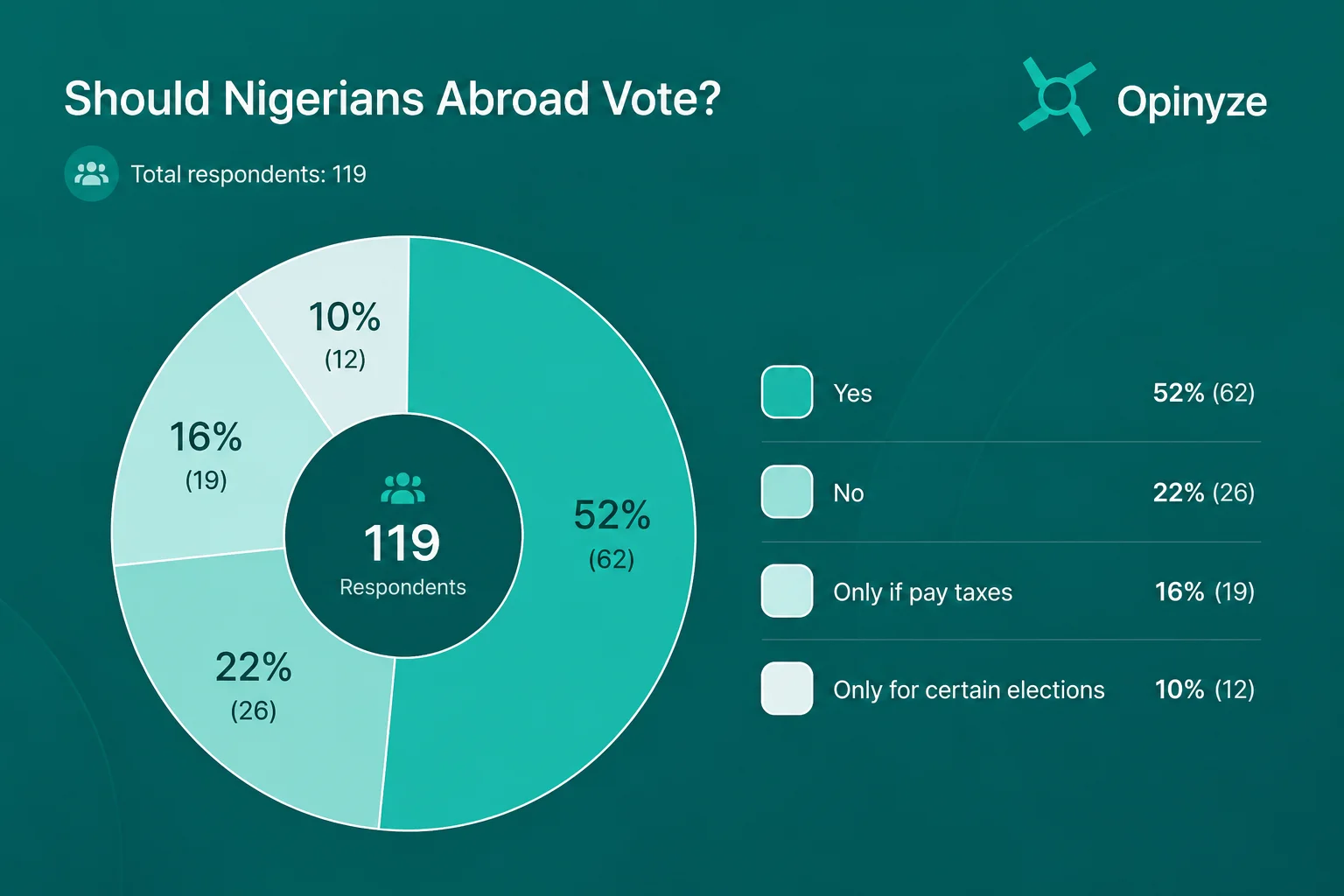
Figure 1. Should Nigerians abroad vote? Distribution of responses (n = 119).
Contextual alignment: These domestic results echo broader advocacy. INEC argues that diasporans should vote, citing citizenship and economic contribution. At the same time, legislators push a Diaspora Voting Bill, which passed second reading in 2024, to amend the Constitution and the Electoral Act.
Diaspora Voting: Trends and Context
Diaspora size and economic impact
According to NiDCOM, Nigeria’s expatriate population sits at an estimated 17–20 million. In 2025, they remitted $21.8 billion, about 12% of GDP and, by a wide margin, the country’s largest source of foreign-exchange inflow. Many analysts see it as inequitable to lean on this group economically while denying them a vote.
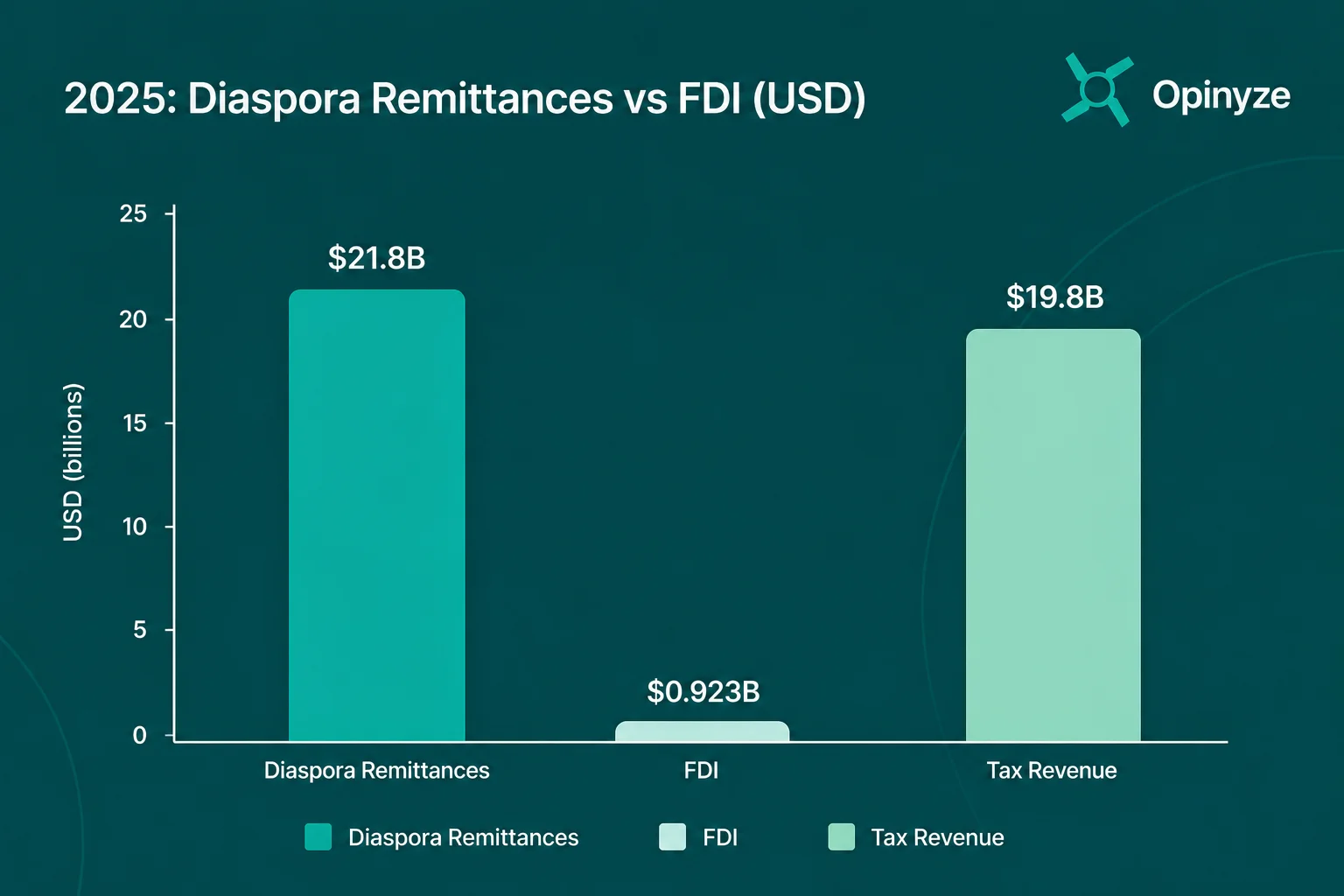
Figure 2. 2025 diaspora remittances dwarf foreign direct investment (USD).
How Nigeria compares across Africa
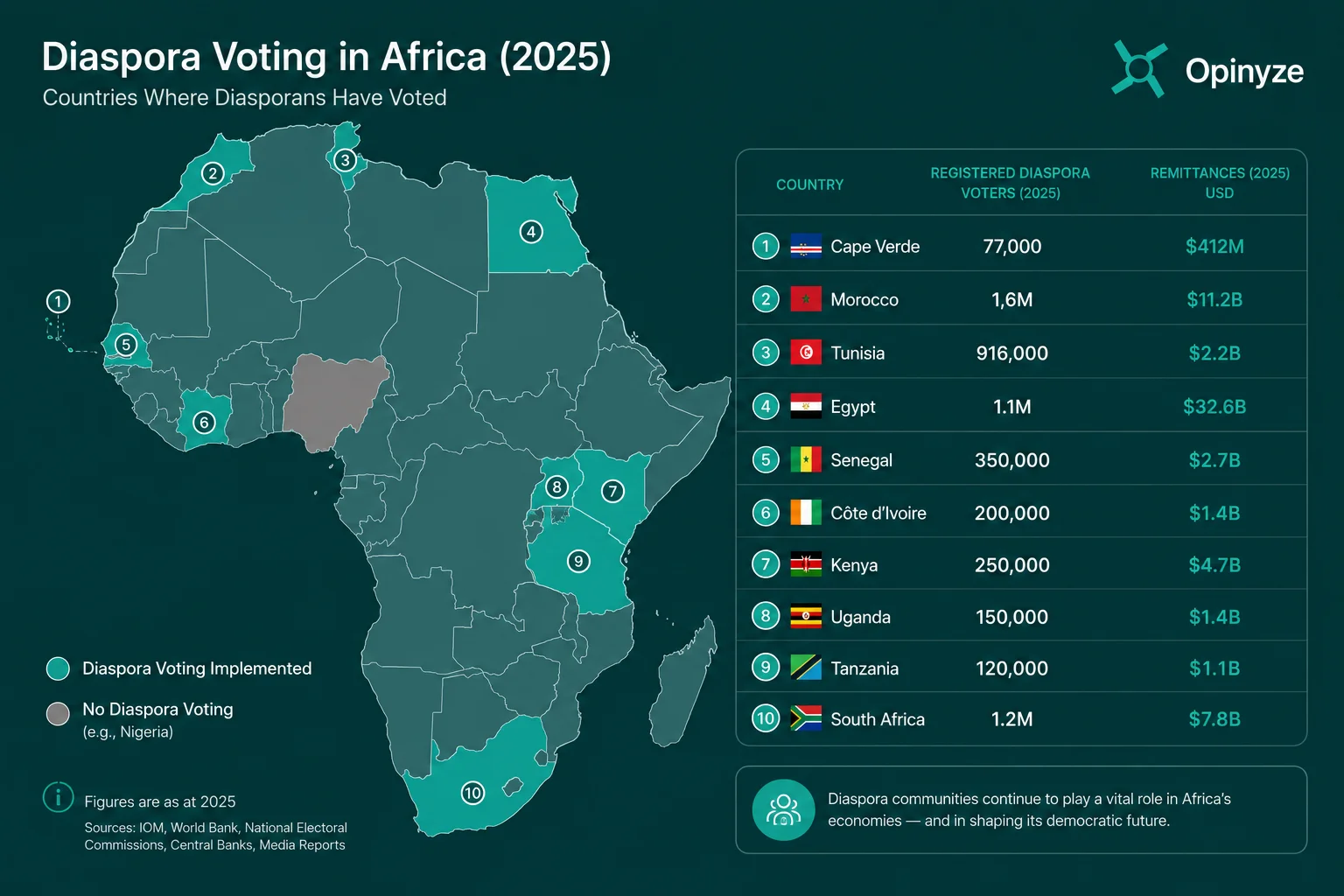
Nigeria currently lags behind many of its peers. At least 32 African nations already allow diaspora citizens to vote, and roughly 141 countries worldwide have some form of external voting provision. Senegal, for example, registered 350,000 overseas voters in 2024.
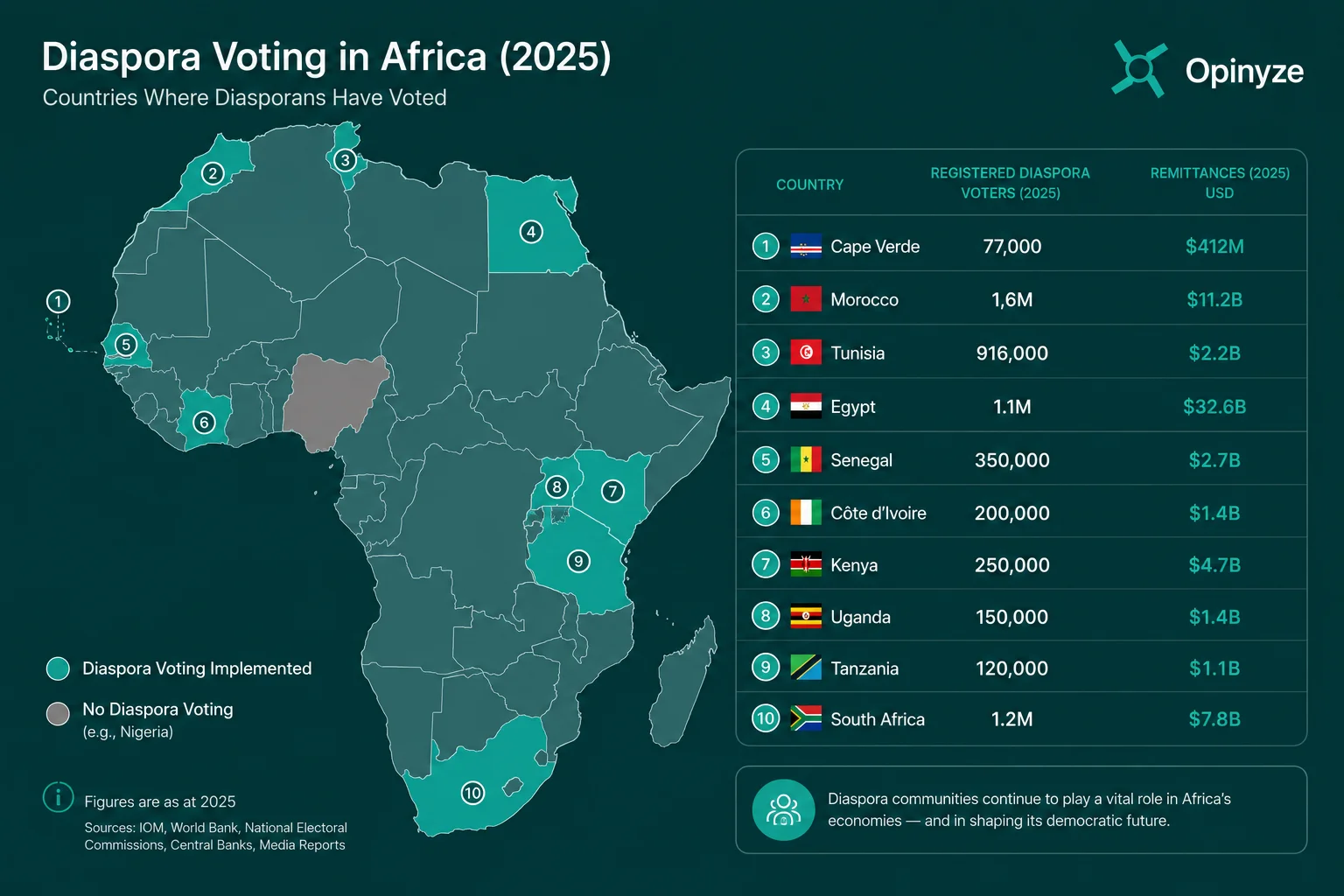
Figure 3. Diaspora voting across Africa in 2025. Nigeria remains an outlier.
Legislative action and official position
Legislative momentum: Under the 10th National Assembly, Nigeria is actively pursuing change. The House Speaker and NiDCOM back a Diaspora Voting Bill to grant overseas Nigerians voting rights, though constitutional hurdles remain; INEC notes that Sections 77 and 134 of the 1999 Constitution would need to be amended.
Official position: INEC Chairman Prof. Mahmood Yakubu has publicly urged reform, arguing that diasporans are citizens who contribute to the economy and deserve inclusion. INEC has said it is ready to accommodate diaspora voting once the law permits, an institutional narrative that closely tracks this poll’s findings.
Frequently Asked Questions
Can Nigerians abroad vote in elections right now?
No. Despite their scale and economic weight, Nigerians living abroad currently cannot vote in national elections. Enabling it would require amendments to the 1999 Constitution and the Electoral Act.
Do Nigerians support diaspora voting?
Yes. In this 2026 Opinyze poll, 52% supported it unconditionally, and about 78% supported it in some form once conditional answers were included.
How many African countries already allow diaspora voting?
At least 32 African nations already permit citizens abroad to vote, and around 141 countries worldwide have external voting provisions.
How much does the Nigerian diaspora contribute economically?
An estimated 17–20 million Nigerians abroad remitted about $21.8 billion in 2025, roughly 12% of GDP and the country’s single largest source of foreign exchange inflow.
Question asked: “Should Nigerians living abroad be allowed to vote in national elections?” (single-choice: Yes / No / Only if they pay taxes / Only for certain elections).
Survey Overview
Fieldwork Period: May–July 2026
Target Audience: 119 unique, NIN-verified Nigerian residents with one or more relatives in the diaspora
Gender Demographics: 68 Female | 51 Male
Published by Opinyze – 35–44-year-olds: AI-powered public opinion and polling.
Sources: Opinyze poll data (2026); NiDCOM; INEC; IOM; World Bank; national electoral commissions.
Behind this story
Explore the data yourself
Written by
Toyyib Uthman
Lead Analyst · Opinyze Research
Keep reading
Related stories


Get the next report first
One email when we publish new data on what Africa thinks. No noise.
Discussion (0)
Posting will ask you to sign in. Takes about 20 seconds, your draft is safe.
No comments yet. Be the first to share your take.