Election Integrity: 2027 Nigeria General Elections
INEC's new leadership has staked its 2027 credibility strategy on winning over Nigeria's young, "digital-native" first-time voters.
Toyyib Uthman
Lead Analyst
Election Integrity: 2027 General Elections
INEC's new leadership has staked its 2027 credibility strategy on winning over Nigeria's young, "digital-native" first-time voters. The commission's own chairman has framed this cohort as the one that will decide whether the institution is trusted.
Can the next general elections truly be free and fair?
Since the 2023 elections, electoral credibility has remained one of the country's most debated issues. The introduction of technologies such as BVAS and the Improved Results Viewing (IReV) portal raised public expectations, but the controversies that followed also left many Nigerians questioning whether electoral reforms alone are enough to guarantee credible elections. To better understand public sentiment, Opinyze asked verified Nigerians one simple question:
"Do you believe the 2027 general elections can be free and fair?"
The responses reveal a nation that remains hopeful but cautious.
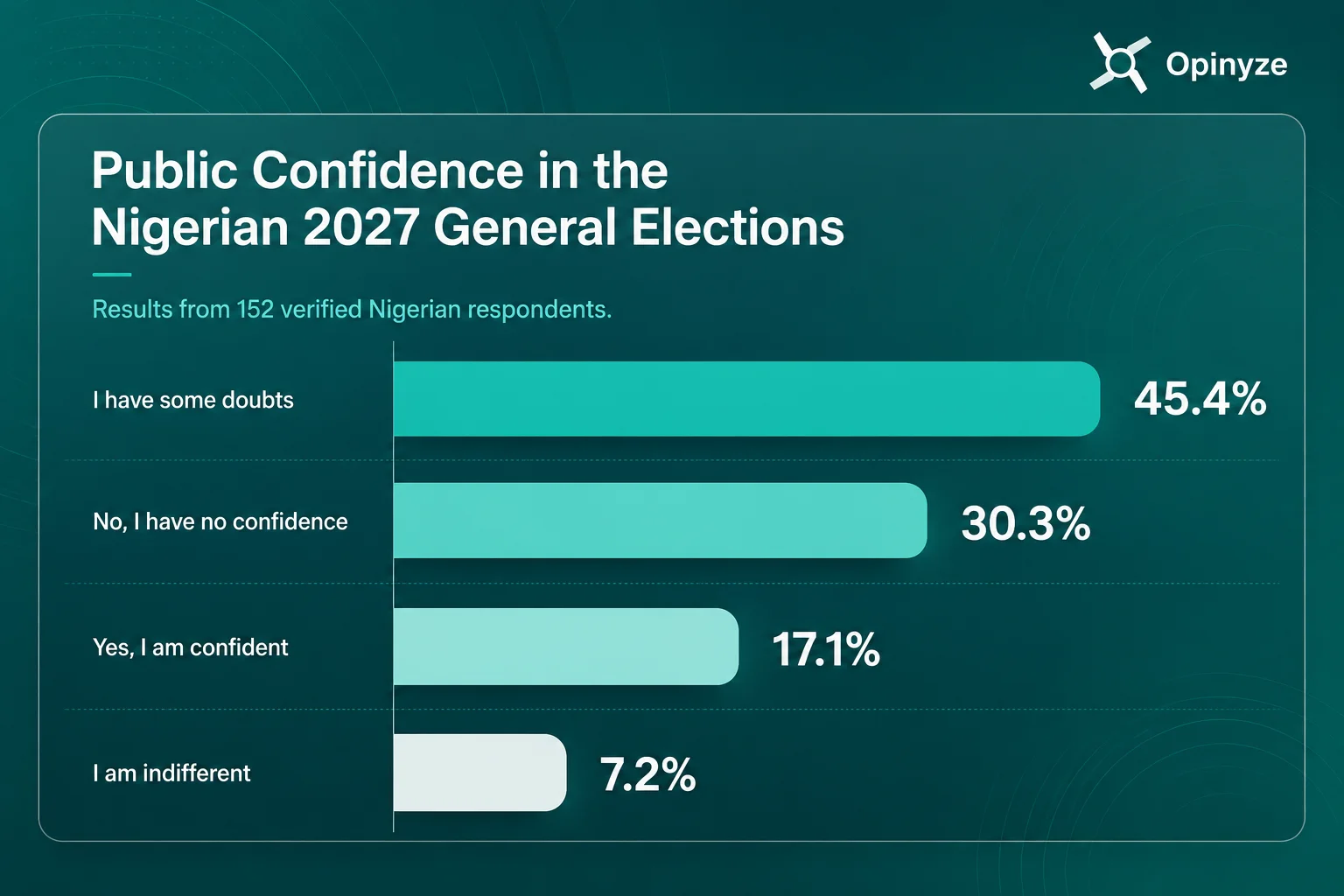
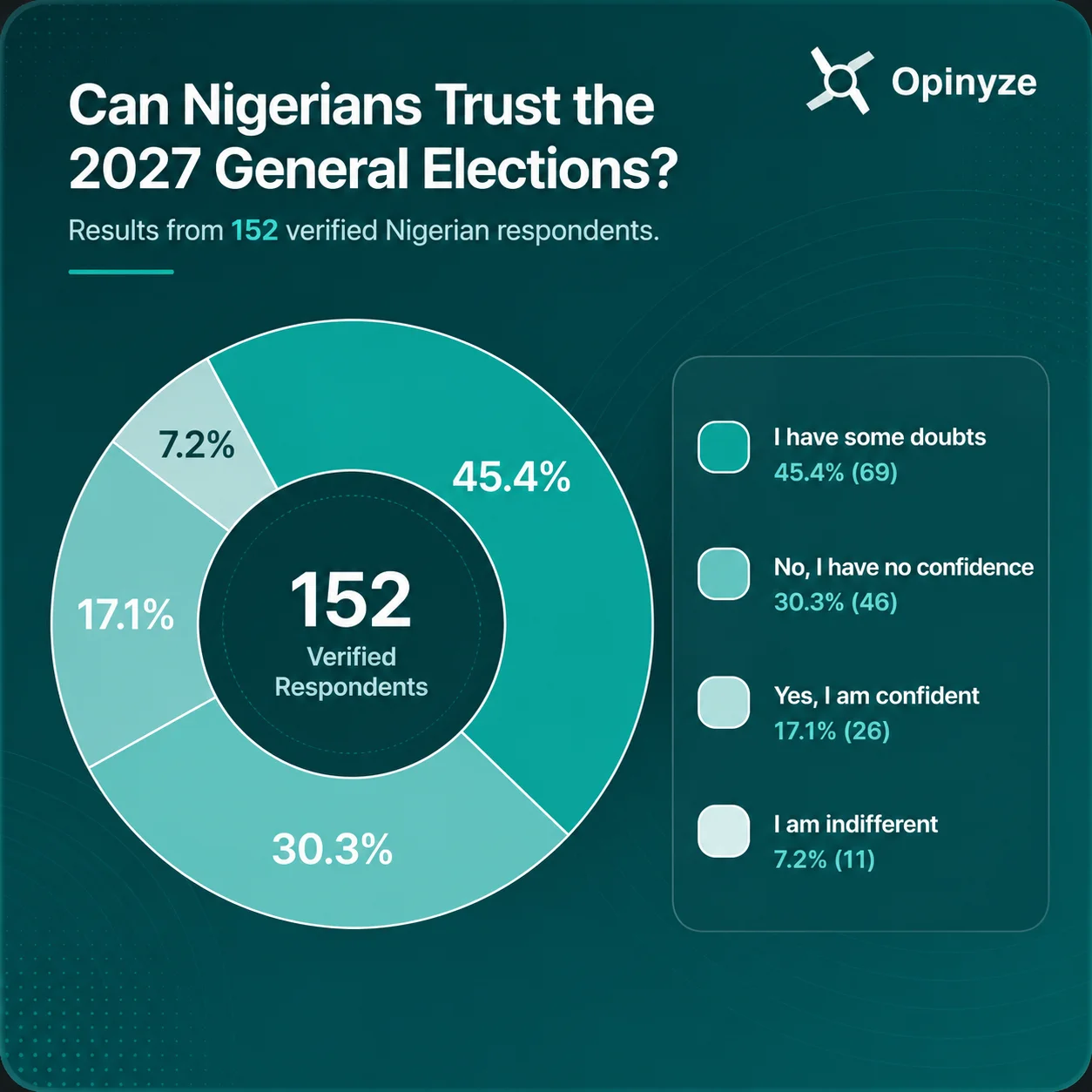
At first glance, one statistic immediately stands out. Nearly 76% of respondents either have doubts or lack confidence entirely in the credibility of the 2027 elections.
One of the most interesting findings isn't necessarily the number of people who lack confidence; it's the number of people who say they simply have doubts. Almost half of respondents selected this option. Many Nigerians are not saying the elections cannot be credible; instead, they are saying they need convincing. This presents both a challenge and an opportunity for electoral institutions. Trust has not disappeared; it simply hasn't been earned yet.
Although this survey focused primarily on public confidence, one demographic trend is impossible to ignore. Most respondents came from younger age groups.
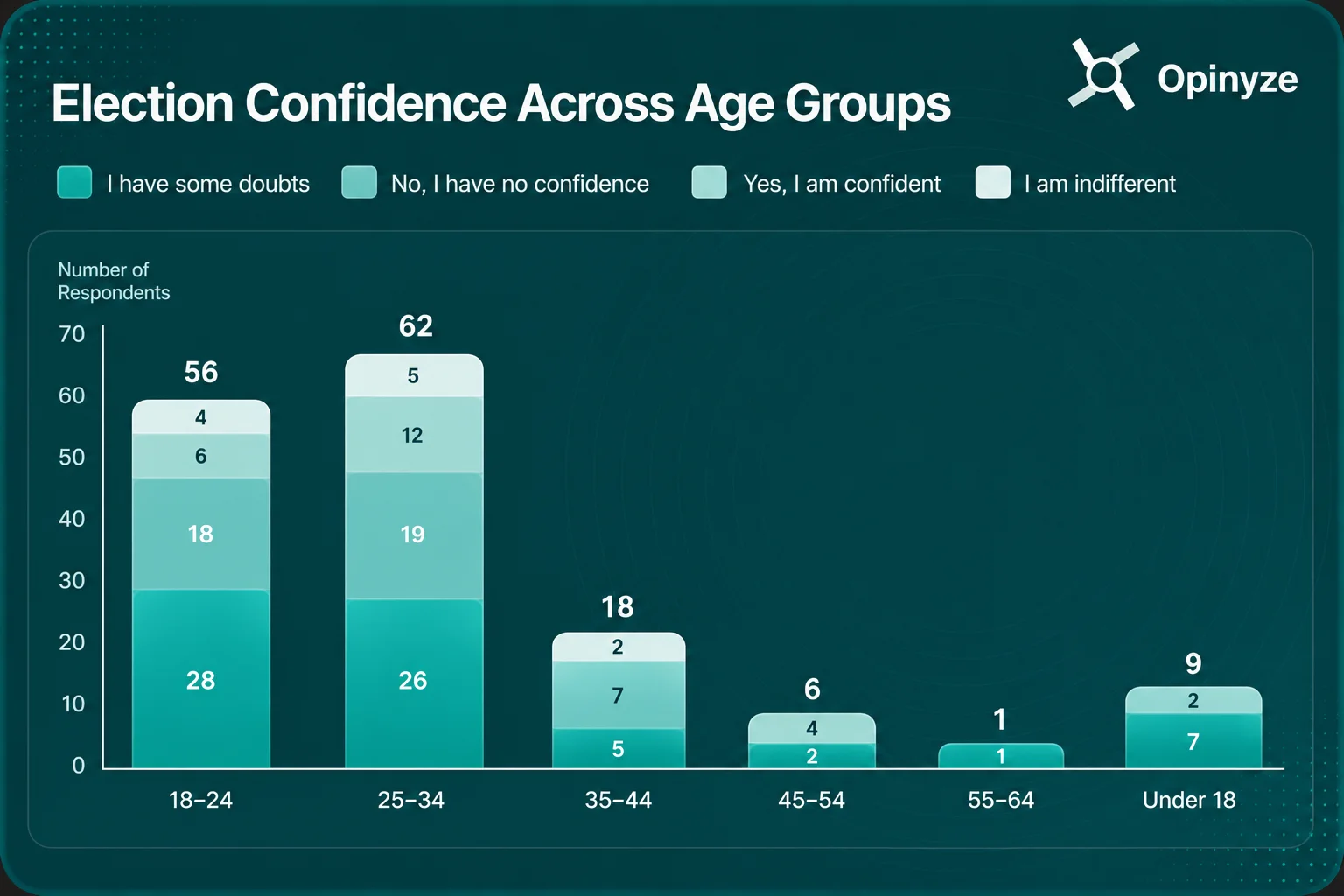
18-24 and 25-34-year-olds make up 78% of this sample, and they are the two most sceptical brackets in the poll, not the most reassured. INEC's tech-transparency narrative is explicitly built to win first-time, digitally fluent young voters, yet this is precisely the group showing the least confidence in the process. If this pattern holds at scale, INEC's institutional messaging is not landing with its own priority audience.
Their opinions increasingly shape political conversations online, influence public discourse, and drive civic engagement. Winning the trust of young Nigerians may therefore become one of the defining challenges ahead of the 2027 elections.
The confidence of the respondents in the 2027 election's credibility is sharply stratified by their economic status.
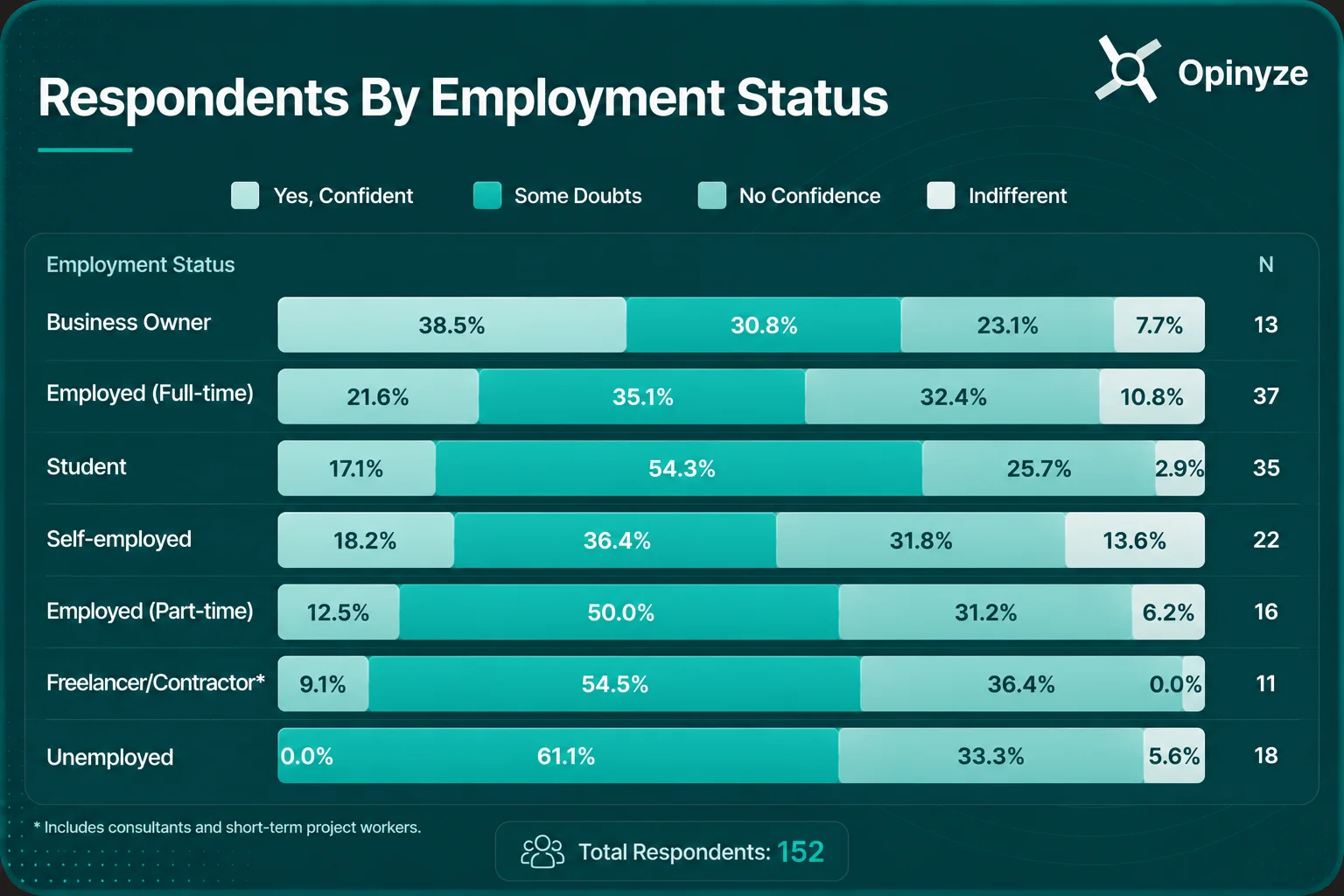
The confidence of business owners in the forthcoming general election is seen as over four times that of unemployed respondents. In fact, not a single unemployed person surveyed felt confident in the upcoming elections. This means the lack of trust isn't just a political issue; it’s an economic one. People who are struggling financially are the first to lose faith that the system can work for them.
The responses captured by Opinyze reflect broader national conversations that have continued since the 2023 elections. Among the issues frequently discussed across traditional and digital media are:
Electoral transparency
Result transmission
Institutional independence
Judicial interpretation of election disputes
Voter confidence
Accountability
These discussions continue to influence how Nigerians evaluate future elections. Rather than relying solely on promises of reform, many citizens appear to be waiting for concrete evidence that electoral processes will improve.
Behind this story
Explore the data yourself
Written by
Toyyib Uthman
Lead Analyst · Opinyze Research
Keep reading


Discussion (0)
Posting will ask you to sign in. Takes about 20 seconds, your draft is safe.
No comments yet. Be the first to share your take.