Africa's $1 Trillion E-Commerce Forecast: What It Means for Nigeria
A new report forecasts Africa's e-commerce market will rise from $317 billion in 2024 to more than $1 trillion by 2033, with Nigeria second on the continent. Here is what the numbers mean for shoppers and merchants.
Opinyze Research
Editorial team
On this page
What the $1 trillion e-commerce forecast actually says
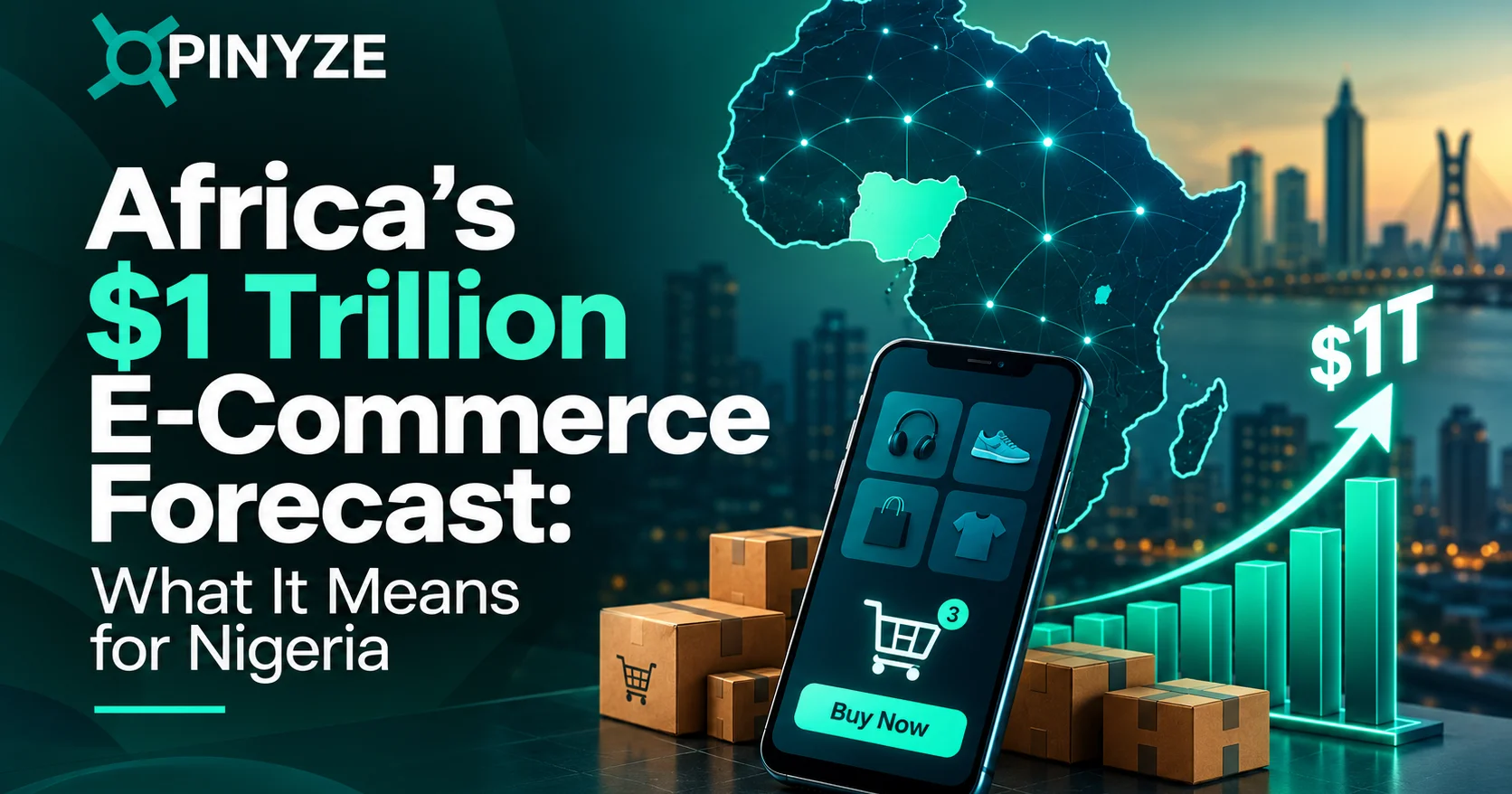
B2C e-commerce is business selling directly to consumers, and in Africa it is mostly done on phones. A report added to ResearchAndMarkets.com on 8 October 2026 forecasts that Africa's e-commerce market will rise from USD 317 billion in 2024 to more than USD 1 trillion by 2033. That is roughly a threefold rise over nine years, and it is a forecast, not a measured result.
The report, titled "Africa B2C E-Commerce & Payments 2026: Instant Payments, Infrastructure, and South Africa Deep Dive", describes the change as structural expansion. It attributes it to mobile-first connectivity, fintech innovation and real-time payment infrastructure.
B2C activity is the leading business model in that market. The report links it to demand for essential services, consumer goods and everyday retail products. Mobile access is helping more consumers reach digital marketplaces, payment applications and online service providers.
For a Nigerian reader, the number matters because it sets the size of the prize. It also tells you the report is looking at the continent as a whole, not at Nigeria alone.
Instant payments: the 64 billion transactions behind the forecast
Instant payment transaction volumes exceeded 64 billion by 2024, with transaction values approaching USD 2 trillion, according to Yahoo Finance. That figure covers the whole continent, and it shows how much money already moves through real-time systems.
The report says mobile payments are becoming central to e-commerce, commercial activity, public services and government transactions. It also says real-time, low-cost transfers can improve transaction efficiency, support merchant settlement and broaden access to digital financial services.
But the report adds a condition. It says continued investment in interoperable systems will be essential as payment providers, banks, fintech platforms, regulators and governments connect domestic networks and seek cross-border scale. Interoperable means different payment systems can talk to each other, so a transfer from one platform can land in another.
The next phase of growth will depend on liquidity management, settlement speed and execution-layer infrastructure, not only on consumer demand, the report says. Liquidity is the cash available to settle transactions. Settlement is the point at which money actually moves between parties.
One reading is that the instant-payment numbers are strong, but the plumbing behind them decides how far the growth travels.
Smartphones: from over 50% to more than 80% by 2030
Smartphone adoption in Sub-Saharan Africa is projected to rise from over 50% in 2024 to more than 80% by 2030, the report says. That is a projection for the region, not a Nigerian figure, and the report does not state a separate Nigerian smartphone number.
The report links rising smartphone adoption, broader internet access and increased confidence in online platforms to the shift from cash to mobile and instant payments. In plain terms, more phones in more hands means more people able to shop and pay online.
Adoption remains uneven across Africa, the report says. It lists differences in infrastructure, internet availability, logistics capacity, financial inclusion and consumer trust as the reasons. Financial inclusion means people having access to banking or payment services.
For a merchant in Kano or Port Harcourt, the 80% figure is a signal about the direction of travel, not a promise about their own street. The report does not say that crossing 80% will remove any single barrier on its own.
Where Nigeria sits: second on the continent, and why that is not the whole story
South Africa leads the continent in e-commerce scale and market maturity, followed by Nigeria and Egypt, the report says. It attributes their position to relatively developed digital ecosystems, expanding fintech sectors and large addressable consumer markets.
Being second on that list matters. It means Nigeria is already one of the three markets the report treats as furthest ahead. It does not mean the local experience matches the continental forecast.
The report says Africa's fragmented currency and regulatory environment creates operational challenges for payment providers, particularly when transactions involve multiple jurisdictions. A fragmented currency environment means many different currencies with different rules. A jurisdiction is a country or area with its own laws.
It also says greater coordination among financial institutions, technology providers and policymakers could improve system resilience and support regional expansion. Coordination here means the different players working to common standards.
This is where the forecast meets the shop floor. The continental figure describes a market. The Nigerian merchant still deals with the platform in front of them, the customer's trust and whether a payment lands when it should.
What Nigerian shoppers and merchants can watch next
The report names interoperability, liquidity and settlement as the key scaling priorities for the market. Those three words are the practical checklist for anyone selling online in Nigeria.
It says real-time settlement and improved treasury optimisation are helping market participants manage capital more efficiently, reduce transaction friction and strengthen payment reliability. Treasury optimisation means managing cash so it is available where and when it is needed.
It also says the outlook remains closely linked to mobile connectivity, fintech investment, payment interoperability and efficient settlement systems.
One reading of the report is that the pace at which Nigerian merchants see the benefit depends on payment reliability and consumer confidence. The report lists consumer trust among the constraints on adoption, alongside infrastructure, internet availability, logistics capacity and financial inclusion.
For shoppers, the useful question is not whether the market will be worth $1 trillion by 2033. It is whether the next payment you make settles quickly and whether the platform you use holds up. For merchants, the question is whether your payment provider connects to the rest of the system.
What to watch next: whether investment in payment interoperability translates into faster, more reliable settlements for merchants, and whether growing smartphone adoption strengthens consumer confidence in online platforms.
To understand how Nigeria’s digital consumer market is evolving, explore Opinyze’s Netflix Nigeria Market Insight Survey and Nigeria Social Commerce & TikTok Consumer Study. These research initiatives examine consumer behaviour across digital entertainment and social commerce, offering additional perspectives on how Nigerians engage with digital platforms as online markets continue to expand.
Behind this story
Explore the data yourself
Written by
Opinyze Research
Editorial team
Keep reading
Related stories
Get the next report first
One email when we publish new data on what Africa thinks. No noise.
Discussion (0)
Posting will ask you to sign in. Takes about 20 seconds, your draft is safe.
No comments yet. Be the first to share your take.