Banned Pesticides in Nigeria: NAFDAC Warning and What It Means
NAFDAC says banned pesticides worth over ₦800 million were seized in 2025. Here is the list of banned chemicals, the health risks, and what to do.
Opinyze Research
Editorial team
On this page
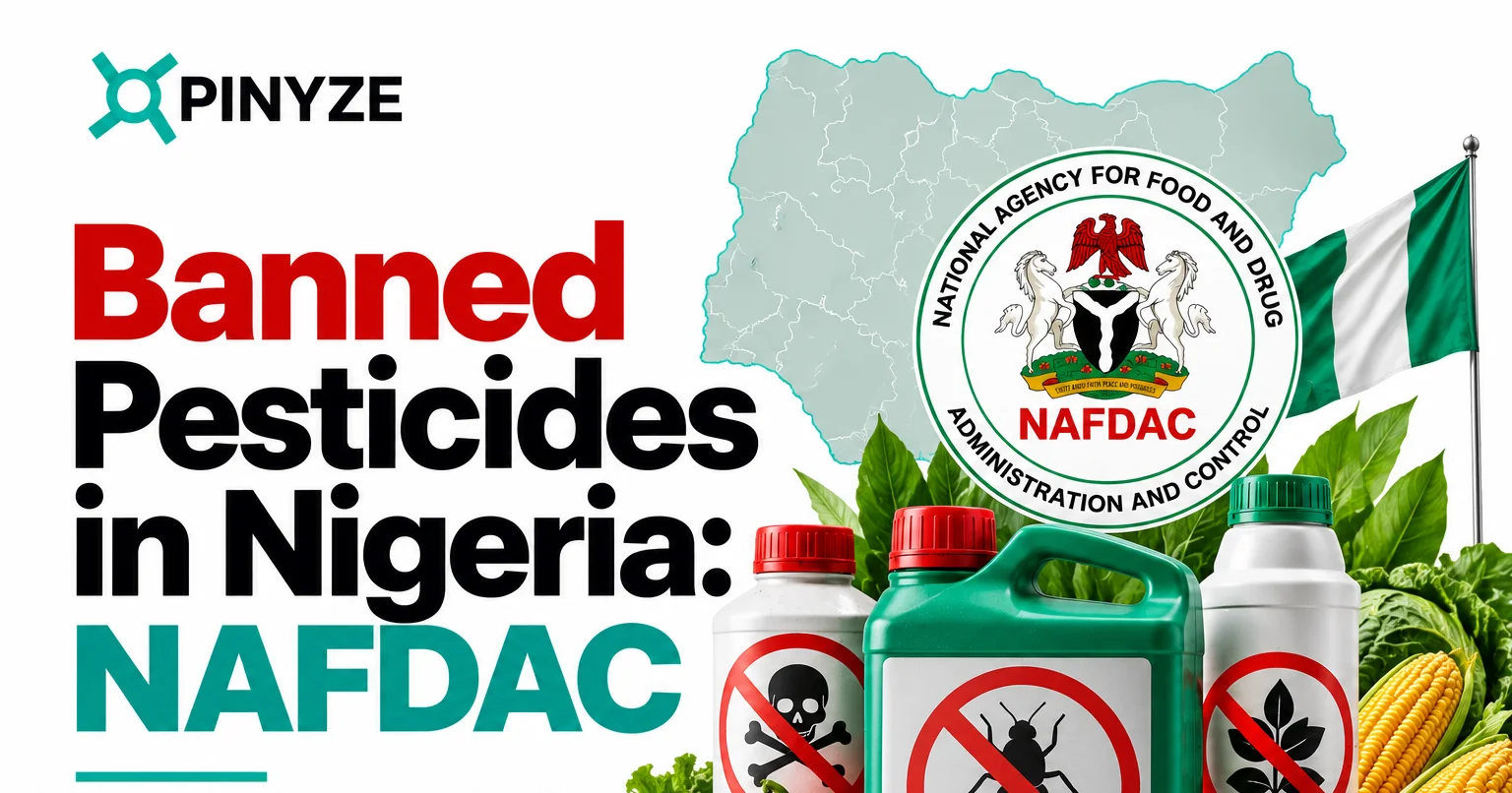
Banned pesticides are agrochemicals that the National Agency for Food and Drug Administration and Control (NAFDAC) has prohibited from being manufactured, imported, sold or used in Nigeria after scientific reviews found them dangerous to health or the environment. In October 2026, NAFDAC warned that these banned products are still flooding open markets across the country, putting farmers and consumers at risk.
What Are Banned Pesticides in Nigeria?
NAFDAC has banned three main active ingredients: paraquat, chlorpyrifos, and atrazine. The bans took effect on 1 January 2024 for paraquat, 1 November 2024 for chlorpyrifos, and 1 January 2025 for atrazine. All phase-out grace periods ended on 1 January 2026, meaning from that date, no product containing these chemicals can legally be manufactured, imported, distributed, sold or used in Nigeria.
In addition, NAFDAC has prohibited the importation, manufacture, and open-market or supermarket sale of 100ml pack sizes of dichlorvos, popularly known as DDVP, because of widespread misuse on food crops. The agency made this known in a statement signed by its Director-General, Professor Mojisola Adeyeye, as reported by Punch.
Why NAFDAC Issued the Warning
NAFDAC says the illegal movement of banned and unregistered pesticides across Nigeria's borders poses a serious threat to public health, food safety, and the environment. The agency has intensified surveillance and enforcement operations to dismantle illegal supply chains.
The scale of the problem is shown by recent seizures. In 2025, NAFDAC seized banned agrochemicals worth more than ₦800 million across Ogun, Ondo, Osun, and Oyo states. Between September 2024 and July 2026, enforcement operations in the North-West zone intercepted 2,974 cartons of paraquat-based pesticides valued at about ₦148.7 million. In Kebbi State, NAFDAC intercepted 5,619 cartons (67,428 litres) of paraquat and 500 cartons (5,000 kilogrammes) of atrazine. The agency also sealed four unauthorised pesticide manufacturing facilities in Bichi, Kano State.
These figures come from NAFDAC's statements as reported by Independent Newspaper Nigeria and Nigeria Info FM.
Health and Food Safety Risks for Nigerians
The danger is not only from illegal sales. A NAFDAC market study found pesticide residues in beans that exceeded safe limits, including pyrethroid and dimethoate. Dimethoate is not approved for preserving harvested beans against weevils, yet it is being used that way.
NAFDAC warns that even approved pesticides can be dangerous if misused, applied to the wrong crops, or if crops are harvested before the recommended pre-harvest interval. Banned chemicals like paraquat and chlorpyrifos are particularly hazardous to health and the environment.
Professor Adeyeye said: "The illegal movement of banned and unregistered pesticides across our borders poses a serious threat to public health, food safety, and the environment." This quote is from the Punch report.
Who Is Affected and What Farmers Should Do
Farmers, agro-input dealers, distributors, and consumers are all affected. Farmers who use banned pesticides risk their own health and the health of people who eat their produce. Consumers may unknowingly buy food with dangerous chemical residues.
NAFDAC urges farmers to buy pesticides only from licensed dealers, follow label instructions, apply recommended quantities, observe pre-harvest intervals, and dispose of empty containers safely. The agency has trained more than 2,000 agro-input dealers nationwide to help them identify genuine products and use pesticides safely.
To strengthen enforcement, NAFDAC is expanding its zonal offices from three to six to cover all six geopolitical zones and is working with security agencies to prosecute offenders.
What to Watch Next
NAFDAC says it is intensifying border checks, market surveillance, and enforcement against illegal pesticide businesses. The agency calls on the public to report suspected illegal or unsafe products to its nearest offices or official reporting channels.
Further seizures and prosecutions are expected as enforcement expands. For consumers, the key is to buy food from trusted sources and to report any suspicious pesticide sales. You can also stay informed by following NAFDAC announcements and reading Opinyze's coverage of fake products in Nigeria and Africa's data gap for broader context on regulatory challenges.
Behind this story
Explore the data yourself
Written by
Opinyze Research
Editorial team
Keep reading
Related stories

Get the next report first
One email when we publish new data on what Africa thinks. No noise.
Discussion (0)
Posting will ask you to sign in. Takes about 20 seconds, your draft is safe.
No comments yet. Be the first to share your take.